Saturday, 2 July 2016

So you think you live in a democracy?

The UK's referendum result last week - to leave the European Union - has left the nation in shock. Next steps are far from clear, with those who led the leave campaign quickly back-tracking on commitments they made in the run-up to the vote, and those who argued for the UK to stay in the EU resigning, facing calls to resign or threatening to punish voters for their choice.

In my first post, I set out the reasons for my vote - increasing democracy, investing in public services, redistributing wealth and global demilitarisation. Along with 49% of those who voted to leave, the single biggest reason for me to vote out was "the principle that decisions about the UK should be taken in the UK".

So what kind of democracy are we living in? 


Clearly not one that values decisions made by referendum: 
Democracy is not a 'fair weather' value - either it's important, or it's not. If it's important, ensuring decisions made through democratic processes are followed through is vital otherwise what happens when there's a vote on ending austerity, or one about protecting human rights/the environment/whether to go to war, which the establishment choose to ignore, or repeat until they get the "right answer"?

Nor is our democratic nation one where everyone's vote is thought equal: 

  • As a self-confessed "out" voter, I've been labelled many things over the last week: racist, ignorant, and, interestingly, old - and for the latter reason, some quarters of society suggest my vote should be worth less, or I shouldn't have one at all 
  • "Stupid Brexiteers" have been ridiculed for not understanding how the referendum would work and not making informed decisions, which they now regret - well it turns out the "1 million people regret their leave vote" headlines are all based on about 30 people saying they would now change their vote, (compared to about 20 people who voted remain who now wanted to vote leave) out of a sample of 1,033 people surveyed on 24th and 25th June
  • At the last general election, because we vote in a First Past the Post system, my vote was worth just 0.103 of a vote as I live in a very safe seat - find out what your vote is worth democratically and see whether you feel as disenfranchised as I do
Universal suffrage means all adults get a vote, whether they're male or female, young or old, rich or poor. Whether they agree with you or not

And crucially it's not one where we have a free and diverse media holding our politicians to account: 

  • According to the media reform coalition, "Britain has one of the most concentrated media environments in the world" with just two companies controlling nearly 60% of national newspaper circulation (owned by the two billionaires Rupert Murdoch and Jonathan Harmsworth) and, when you include online content, just five companies share 80% of the audience 
  • Lord Leveson's report details various inappropriate relationships and interactions between the big press bosses and politicians leading him to conclude "the evidence clearly demonstrates that...the political parties of [the] UK...have had or developed too close a relationship with the press in a way which has not been in the public interest"
  • And evidence continues to emerge of close relationships and revolving doors between politics, media and the private sector such that propaganda passed off as news is used to instigate government action that serves the bottom line of profit-making companies - the US election is no different 
As Lord Leveson puts it "The press, operating properly and in the public interest is one of the true safeguards of our democracy." Without our press functioning effectively, we are left with campaigns based on biased information, and a move to simplistic, quotable and emotive statements instead of thoughtful and considered opinions and discussions. 

The EU referendum debate was farcical and exposed the lack of democratic processes in this country 


From the “out” campaign’s nonsense claims about increasing funds for the NHS or leaving the EU automatically having any impact whatsoever on immigration, to the “in” campaign conflating the EU and Europe so that a political establishment took on the character of a continent. In doing so, they also failed to explain to the electorate that a vote to leave has nothing to do with our on-going membership of the Council of Europe (along with 40 odd other countries) and associated sign-up to the European Court on Human Rights (ECHR).

Theresa May, Conservative-leader candidate, is not therefore performing double-think when she wants to stay in the EU but get out of the ECHR.

The run-up to the referendum should have been filled with clear plans from both campaigns about what would happen if the vote went their way:
Instead, we the electorate were encouraged to turn on each other, swallow poorly researched and emotively delivered “news”, and pick a side from which to lambast our opponents. If ever we've needed a commitment to democracy with a well-functioning media providing serious, considered and balanced opinion, it is now. 

So where next for our somewhat-but-not-completely-democratic nation? 


We need to move on from "Brexit" - the referendum was held, the decision was clear - if the result had been the other way round, there would likely be no further discussion on the point. Article 50 should be triggered immediately to protect the UK from further EU regulations to which we are no longer party

We urgently need a general election to restore confidence in the elected leaders of our country - in 2015, less than a quarter of people eligible to vote actually chose the current Conservative government to reign over them.

In time, we need to change the First Past the Post (FPTP) electoral system, which enabled the Conservatives to claim over 50% of seats in the House of Commons with only 36.9% of the votes. Exploring other electoral systems should be a major priority for any new government. If you don't think this matters, check out the democratic index, which shows that of the 15 countries scored as more democratic than us, only one other (Canada) shares a FPTP approach, with the others mostly opting for proportional representation. 

And most importantly of all, we need to hold our Government to account for delivering on an agenda that serves the people. In my view, that means:


Now is the time for unity. 


There are and always have been differences of opinion about how we achieve a fairer and more democratic society. But the way we air and share those ideas has been exploited successfully through the press and social media to drive communities apart, playing left-wing against right, middle-class against working-class, young against old

The vote has happened. A result has been declared. Now we need to move forward working together - regardless of the outcome we voted for - to build that fairer society so many of us want to live in. 

Saturday, 18 June 2016

Why I'm voting out


Some people have been surprised by my choice in the upcoming referendum so I wanted to explain my thinking...

I am voting OUT because I value:

(1) ...representative democracy - while the UK has a long way to go to improve our democratic processes, the EU is another layer of control without accountability.
(2) ...government investment in public services - the European Central Bank proposes that the global financial crisis was caused by reckless government spending and therefore must be treated by stringent austerity measures - I simply don't agree.
(3) ...the redistribution of wealth, both nationally and internationally - the EU is founded on the principles of capitalism, which by its nature relies on profit and inequality to drive productivity.
(4) ...global demilitarisation and peace - there are moves afoot to further align and invest in EU countries' armed forces. 

And by the way, I also value:
  • Protecting human rights
  • Protecting the environment
  • Encouraging immigration
  • Providing asylum

Think I've gone crazy? Then read on...
 
(1) I value representative democracy - while the UK has a long way to go to improve our democratic processes, the EU is another layer of control without accountability.

The democratic deficit of the EU is excellently described by the Electoral Reform Society. Highlights include that 74% of people in the UK feel their voice does not count in the EU and 69% of European citizens do not trust the EU.

Key facts we should all know about the EU Parliament: do you know who your MEP is (we have 73), what region they represent in the UK (we have 12) and what they do for you?

And what about the rest of the EU - do you understand how the counsel and the commission work, how they're appointed and what authority/money they have and whose interests they represent? I certainly don't. Suffice to say: there's not a lot of people power here.
 
(2) I value government investment in public services - the European Central Bank, along with other international organisations such as the IMF, posit that the global financial crisis was caused by reckless government spending (not bankers gambling with non-existent money) and therefore must be treated by stringent austerity measures.

This isn't just about Greece - it's also affected Spain, Portugal, Italy and others. It's a rejection of Keynesian economics and in my view it's an approach that has been proven again and again throughout history to be just another way of accumulating more wealth in the hands of fewer people. 

Being a part of the EU means the UK has to stick to the rules of austerity instead of forging its own path. Being in the EU hasn't stopped the truly jaw-dropping cuts to public services supporting the most vulnerable in society: just take a look at the impact of cuts on disabled people, the NHS or local government. One excellent attempt has been made by The Centre For Welfare Reform to bring all this info together - because the Government claims it's too difficult to do - and presents fully transparent methodology and data so you can rework the maths if you like.

(3) I value the redistribution of wealth, both nationally and internationally - the EU is founded on the principles of capitalism, which by its nature relies on profit and inequality to drive productivity. 


While a lot has been made of workers' rights being protected under the EU this is also premised on the fact that 99% are just that 'workers'. Why should we accept that the majority can't be shareholder owners with rights over how their cooperative companies are run? Why do we take it for granted that nine or ten colossal global companies should own almost everything we come into contact with on a daily basis? Being a member of the EU only propagates this attachment to a right-wing belief in capitalism that transfers the wealth from 'workers' to the very few owners.

A great example of this is TTIP: the Transatlantic Trade and Investment Partnership currently being negotiated between the EU and the US. It will require governments to open their health, education and water services, among others, to US private companies and will allow those companies to sue governments if their policies cause a loss to profits, now and in the future. 

You can expect to see more of these stories where government collaborates to conceal company's mistakes in delivering public services to avoid affecting commercial interests.

So, goodbye publicly funded NHS (assuming the Tories don't get there first. Which they're already doing. While we're in the EU.),  goodbye publicly managed schools (oh wait, that's already happening with nearly 20% of primary schools and 65% of secondary schools taken out of Local Authority control, thanks to the current Tory government. While we're in the EU.), and goodbye privatised but highly managed water companies that deliver incredibly high quality, efficient services with strict controls on customer charges. 

And those worker's rights the EU champions? Well under TTIP it's expected some jobs will move to the US as they have fewer protections on labour so it's cheaper to run businesses from there. No doubt loss of jobs will lead to finger-pointing at all those immigrants followed by further attempts to block up EU borders to desperate people escaping violence around the globe.

And while Jeremy Corbyn wants to block it, given the democratic deficit (see above) and the recent developments under the Lisbon Treaty to shift key responsibilities from 'unanimity' (meaning the UK can veto decisions) to 'qualified majority voting' (QMV) means we might not be able to do anything about TTIP. 

The current EU Commission president - Jean-Claude Juncker - will be asking all states to reaffirm their commitment to TTIP in late June. And the EU Trade Commissioner Cecilia Malmström has said delays in securing the deal don't mean the death of it - it's just a delay.

Globally the EU protects its own interests to the detriment of developing countries. 26 out of 28 member states are ranked as 'very high' on the human development index meaning we're mostly a group of well-off countries out for ourselves. For example: 
- the EU lowers the global price of farming produce by subsidising agriculture meaning developing countries can't make their farming pay
- the EU uses import taxes to bully less developed countries to force them into signing trade deals that are advantageous to our 28 nation states but work poorly for our trade partners

So being in the EU promotes the interests of capitalism, namely big business and multinationals, preventing the UK from controlling what international trade deals we do and don't want to be a part of and encourages continued inequality between rich, Western, overwhelmingly white countries and many other less developed nations. Not for me.

(4) I value global demilitarisation and peace - there are moves afoot to further align and invest in EU countries' armed forces.

The EU Commission President Jean-Claude Juncker has said a European Army is needed. The UK has already signed up to the Common Security and Defence Policy, which means our armed services take part in EU military operations now (usually humanitarian at the moment). And other countries like Germany are already developing high level policies for what the EU army could look like, with the German and Dutch armies and navies set for merger.
Even the government's own minister for armed forces, Penny Mordaunt, has claimed the UK will be forced into joining an EU army. Apparently plans for further defences integration are under wraps until after the UK referendum.
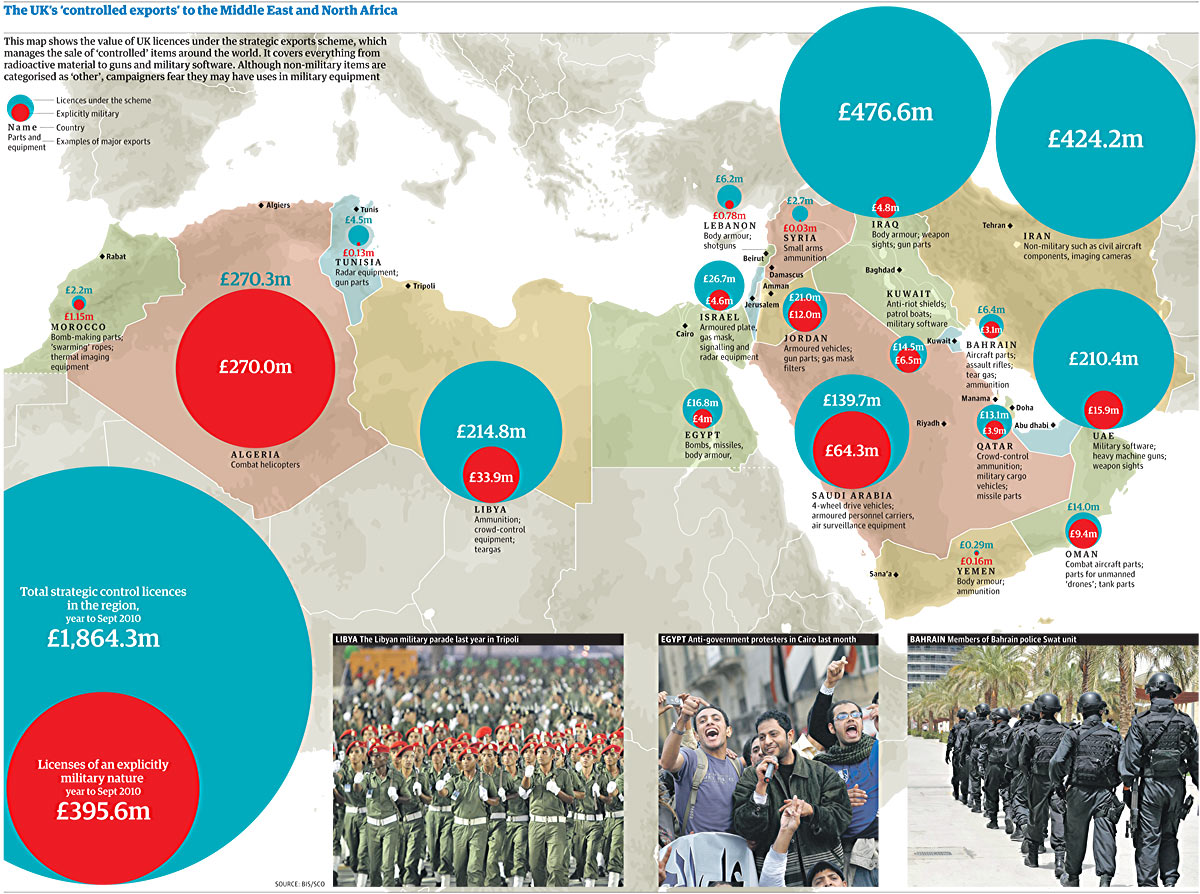
http://www.theguardian.com/news/datablog/2011/feb/22/uk-arms-sales-middle-east-north-africa
The UK in my opinion is already far too interventionist and over militarised. We should be focused on using our resources wisely to look after our own country and to build capacity in other countries for them to do the same...not spending money on developing weapons, selling weapons, invading other countries, supporting armed conflicts in other countries and generally thinking ourselves above international law.

Being in the EU makes it much harder for us the people to vote out governments who support this approach to the use of our resources and makes it more likely we'll continue to behave in this reckless way.


And by the way, I also value:

(1) Protecting human rights - the European Court of Human Rights (ECHR) is not an EU institution. It upholds the European Convention on Human Rights in more than 40 countries in the Council of Europe, not just the 28 member states of the EU. The EU can require member states to enact new laws as a result of ECHR, but so can individual governments. That's why Theresa May can want out of the Convention while still being a supporter of Remain.

(2) Protecting the environment - if we wanted to deliver against the Paris 2015 climate change agreement, and move toward sustainable, green energy with protection for the environment and natural habitats, we could do it. And we could do it while creating jobs and generating economic growth. But there are heavy interests in fossil fuels, and they still get more air-time with EU officials. UK politicians are no better - but we have a greater opportunity to vote them out if they don't deliver against the environmental agenda.

(3) Encouraging immigration - whatever the world tells you, the EU referendum is not about whether you like or dislike immigration (or any variation in between). It simply isn't. Check your facts and make your choices according to what really matters. And if, like me, you think the UK Government rhetoric on immigration stinks (for both EU and global immigrants), make your voice heard at our next general election.

(4) Providing asylum - it's interesting that news of the refugee camps in Calais and other French port towns, and the boatloads of Syrians and North Africans escaping conflicts (many of which we've contributed to), has gone quiet during the run-up to the UK referendum. Instead we are faced with stories of sex-crazed Syrians marauding through city centres, while the hardening of the EU heart against desperate people slips by unnoticed. Even Medecins Sans Frontieres refusing to take EU money because of its migrant policies gets barely a mention. The referendum isn't going to solve the asylum crisis, whether we're in or out.

Conclusion

The EU referendum is not about being a good person who cares about others or an intelligent person who knows the "right answer" - the EU is not inherently good or bad, right or wrong, it just is.

What you are being asked to decide on 23 June is whether you think being part of the EU will enable the UK to do what you think it should...whether that's encourage or reduce immigration, provide or refuse asylum, switch to green energy or introduce fracking, protect human rights or focus on cutting red tape...it's your choice so don't let others stop you thinking for yourself.